
We Asked Women What They Want for Their Uterine Health. Then We Did the Radical Thing: We Listened.
Most health research begins with a form. A woman sits down with someone holding a clipboard, and the form has already decided what she is allowed to say: tick the box and rate the symptom. The vocabulary on the page came out of a clinic, or out of a translation of a clinic, and somewhere in it is a word she has never once used used to describe a condition she has lived with for many of her years. She does her best with it and bends herself to fit the form.
What happens when such form is taken away? When instead of merely fitting her experiences in boxes that assume her wants and pain, she is asked clearly and plainly, “What is your one request from the health system for your uterine health?”
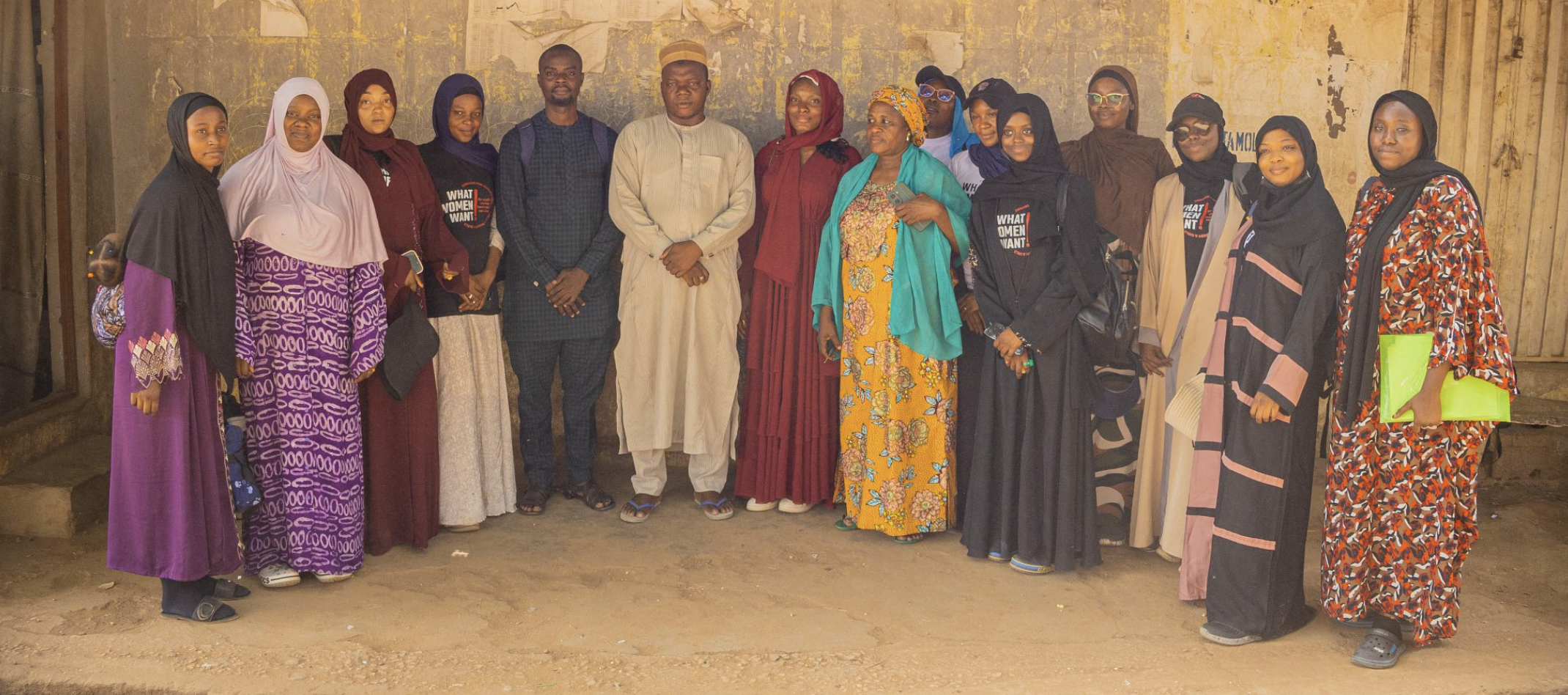
Through The Voices campaign under the Unmute the Womb Program, Youterus Health worked with White Ribbon Alliance Nigeria to gather the voices of 1,000 women across six Nigerian states, representing each geopolitical zone: Rivers, Gombe, Niger, Kaduna, Oyo and Ebonyi. Trained enumerators asked women one question: what is the one thing they would want to change about the quality of uterine healthcare they receive? Their responses were captured word for word, in their local languages, creating a powerful body of evidence grounded in women’s own experiences and priorities.
This approach was a direct adaptation of the WRA global “What Women Want campaign” (a campaign that had been used by the global White Ribbon Alliance, where one open- ended question was asked of women and girls about their own reproductive and maternal health care. That campaign gathered responses from 1.2 million women across 114 countries. Learnings from that campaign showed that the single most common demand worldwide was not a drug or a device. It was respect and dignity [1].
This is what an impactful methodology like that tells us: change who speaks first and you change what counts as evidence.
The usual way women are asked
To see why one open question matters, it helps to look squarely at the standard alternative.
Most of what health systems know about women comes from instruments built somewhere else, in English, for settings that look nothing like the ones most women live in. The imbalance runs all the way through the literature. A scoping review of the global research on how long women wait for an endometriosis diagnosis found that 65% of the studies it could include came from high-income countries [2], which tells you where the questions are being written and whose experience is shaping them.
So the questionnaire is translated, the translation is approximated, and by the time it reaches a woman in a village or a market town, it asks about her body in words she would never choose, inside categories somebody settled in advance. It does not ask what she has noticed, or what frightens her, or what she wants. It asks whether her experience matches what the system already expected to find.
This is a quiet kind of silencing, and it is effective precisely because it looks like diligence. She is consulted on paper and unheard in practice. Whatever does not fit the boxes drops off the record, and what drops off the record does not exist for planners, budgets or policies. Her own account of her own body, easily the richest source of information in the room, never reaches the page.
When she does offer it unprompted, it tends to be filed as anecdote rather than evidence. That pattern is well documented and it is not confined to any one country. When the Department of Health and Social Care in England opened a call for evidence to inform its women’s health strategy, it received close to 100,000 responses, and 84% of the women answering said there had been times when health professionals did not listen to them [3].
The result, in any setting, is a health system planned around what institutions thought to ask rather than what women would have said.
The inversion: one open question, in her own language
So the campaign turned the method around. No checklist, no menu of symptoms. One open question, put in the language she chooses, with her answer recorded verbatim.
Then came the part that matters most. Her words became the starting point of the analysis rather than raw material to be corrected on the way to a category. The research team read what women actually said and mapped clinical and policy concepts onto those answers, not the other way round. If she asked for medicine, the finding was medicine. If she asked for kindness, the finding was kindness.
Given one open question and no script, what women said was clear, practical and impossible to misread. They asked for treatment they can afford.
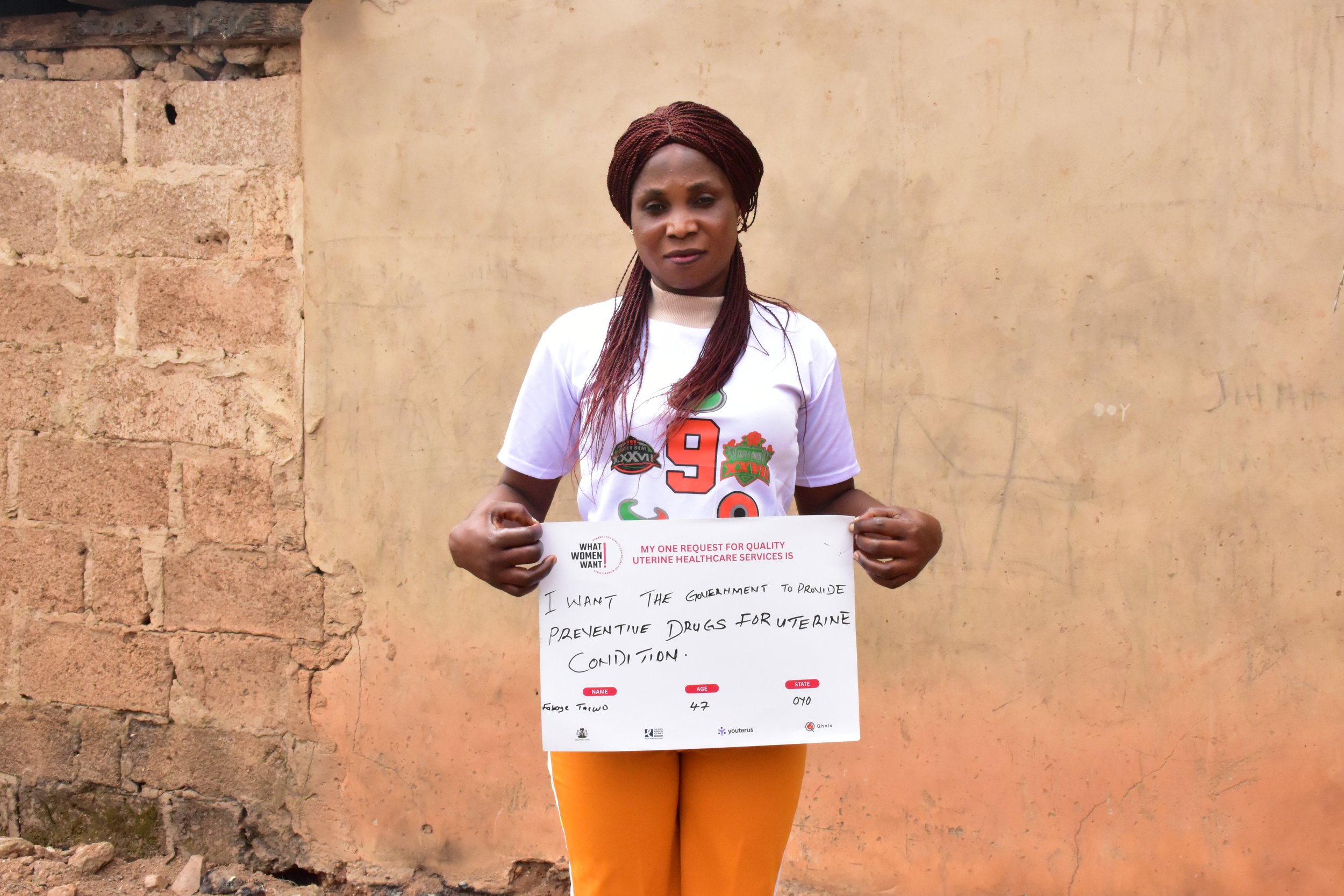
“I want the government to provide preventive drugs for uterine condition”
Female participant, Oyo, age 47 The Voices campaign, Nigeria
That request has arithmetic behind it. Out-of-pocket payments made up 70.9% of Nigeria’s current health expenditure in 2023, against an average of 35.5% across lower-middle-income countries [4], and Nigeria’s Ministry of Health and Social Welfare put health insurance coverage at roughly 19 million people, which is roughly under 10% of the population. For most women, the price of care is whatever is in her hand on the day.
They asked for the medicines that treat the conditions they rarely speak about.
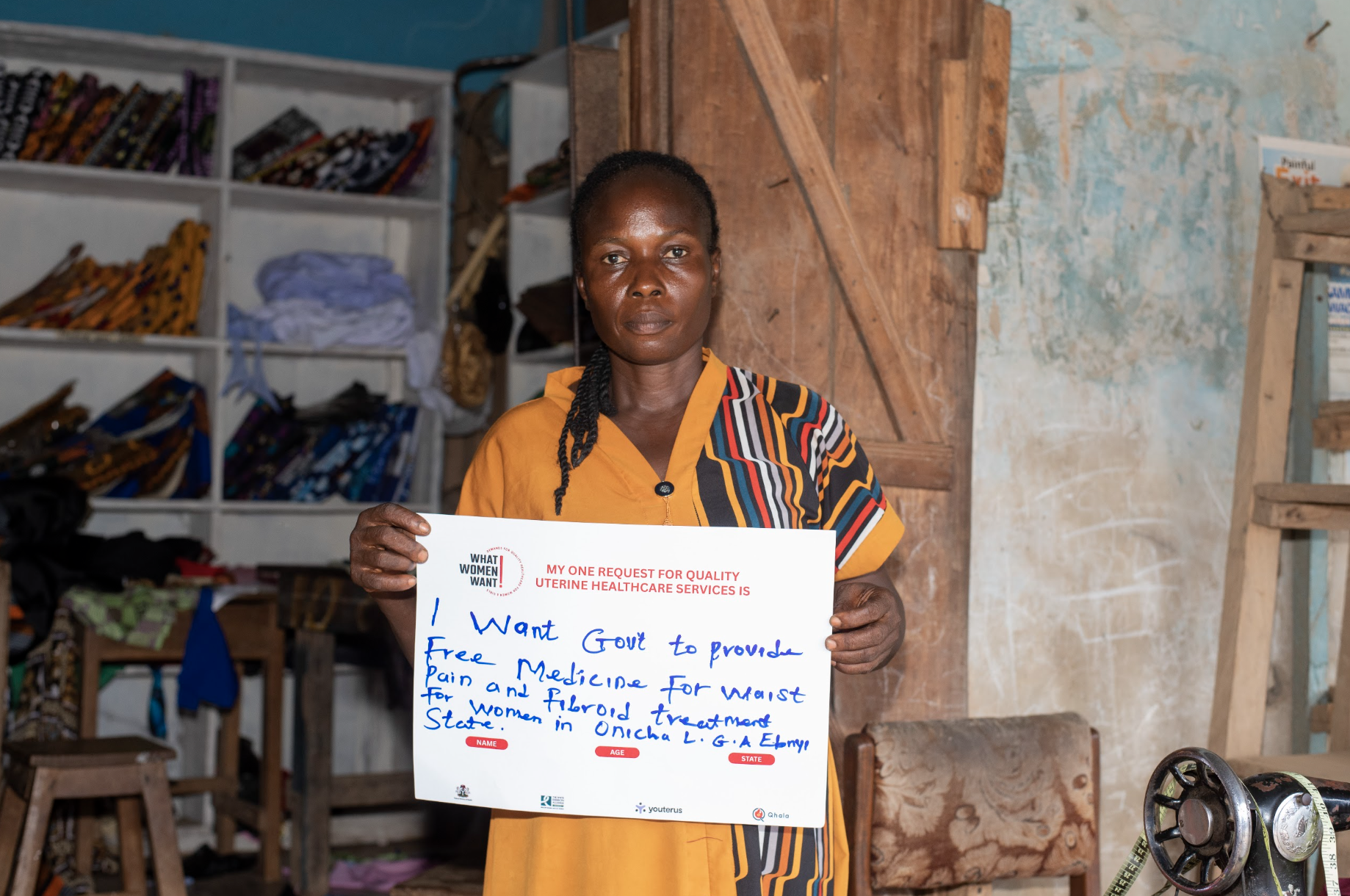
“I want Gov to provide free medicine for waist pain and fibroid treatments for women...”
Female participant, Ebonyi, The Voices campaign, Nigeria
This one is a procurement problem as much as a clinical one. More than 70% of the medicines used in Nigeria are imported, and the currency devaluation constantly pushes prices sharply upward, with some common antibiotics rising by as much as 400% between 2022 and 2023 [4]. A drug that exists but cannot be bought is not, from where she is standing, a treatment.
They asked for skilled people to be there when they arrive.
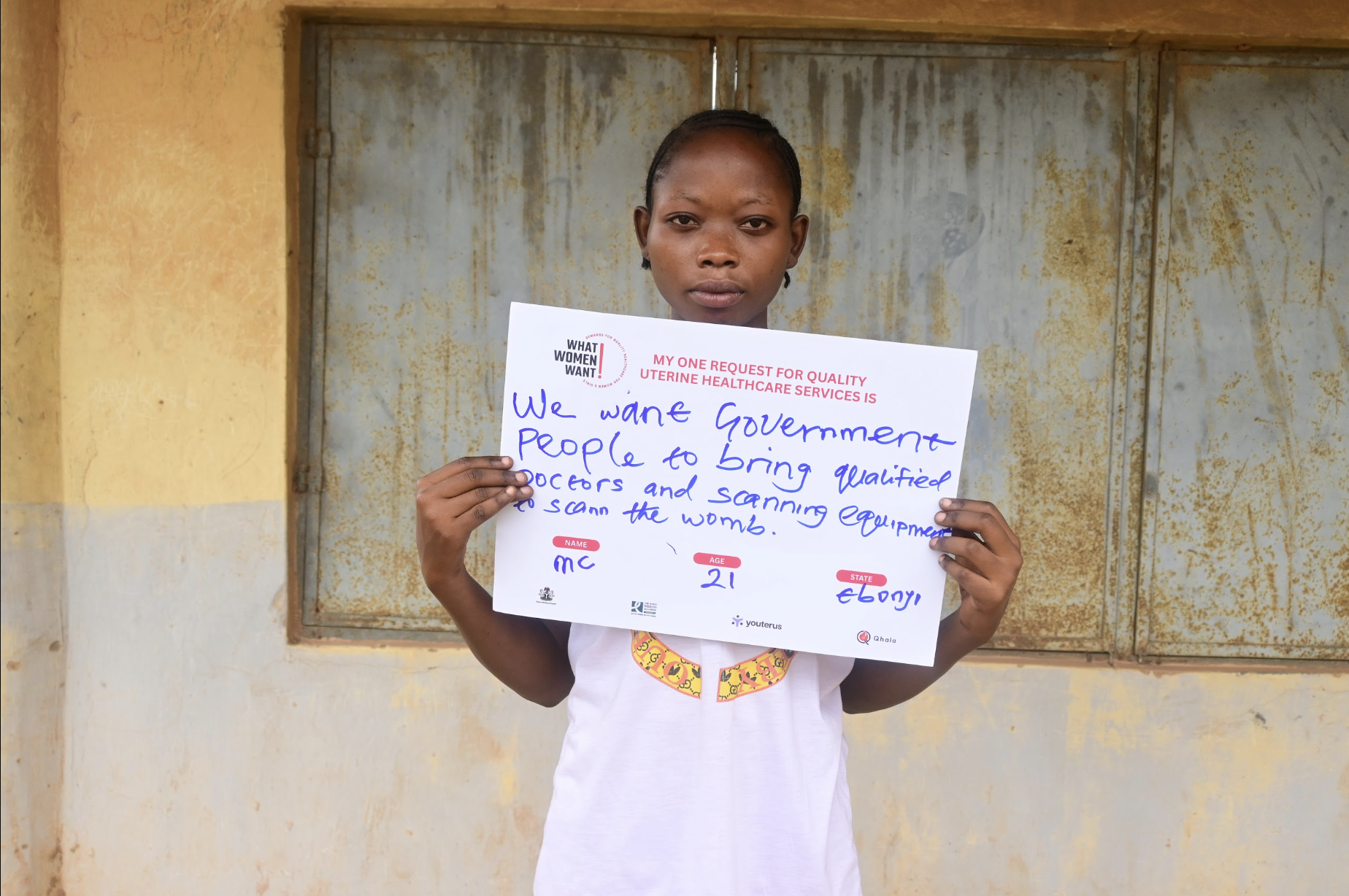
“We want Government people to bring qualified doctors and scanning equipment to scan the womb.”
Female participant, Ebonyi, age 21, The Voices campaign, Nigeria
And they asked for something no form thinks to offer, which is to be treated as though their lives matter, starting from the first moment of the encounter.
“There should be proper monitoring of hospital staff. Sometimes you are seriously ill and lying there helpless, yet the doctors and nurses act as if life means nothing.”
Female participant, Kaduna, age group 35 to 44, What Women Want campaign, Nigeria
She is describing something researchers have now measured directly. In a study that observed 2,016 labours in health facilities in Ghana, Guinea and Nigeria, 41.6% of the women were seen to experience physical abuse, verbal abuse, stigma or discrimination [6]. A secondary analysis of the same observations found that of the women who underwent a vaginal examination, 58.9% received it without having consented [7]. Her request for monitoring is not a complaint about manners. It is a clear-eyed description of the gap between the care she is promised and the care she gets.
Affordable care, real medicines, skilled hands and basic dignity. None of it exotic, none of it unreasonable, and none of it something a checklist would have brought to the surface.
What being asked does to a woman
For many of the women this was the first time anyone had asked what she wanted for her uterine health. Not told her what was wrong with her, not instructed her on what to do next, but asked her.
Being asked hands back a small piece of authority she has rarely been granted over her own body. Her opinion is wanted, and her words are worth recording precisely. For the length of that conversation, the usual direction of the encounter reverses, and the system is the one listening while she is the one who speaks.
A woman saying out loud what she wants for her womb, possibly for the first time in her life, is not a survey response. It is the headline.
Why this matters for everything that follows
Leading with women’s own words gives the work its moral ground before a single technical claim is made. Everything after this can be argued over in the usual ways, and should be. The starting point cannot. A ministry can question a methodology and a funder can question a projection, but neither can dispute what women themselves asked for when a demand arrives in a woman’s own voice, in her own language, in answer to an open question. The wants are not a hypothesis; they are truths revealed from her own experience.
Listening first also earns the right to everything that comes after it. The Womb Index that is being validated through the Unmute the Womb programme exists because of what women said when they were finally asked. The evidence base is being built to verify what they described. The policy ask, when it comes, will be their ask, carried forward. Demand, then method, then evidence, then the ask. The order of our methodology is the argument.
So here is the ask: Listen to the voices. Share them exactly as the women said them, because paraphrasing is how testimonies gets diluted and help make sure the people who fund and run health systems hear what women actually asked for: care they can afford, medicines that treat their conditions, skilled health workers, and the simple dignity of being believed. Women have answered the question. It now passes to everyone else. Having heard what she wants, what are you going to do about it?
Acknowledgements
We would like to extend our sincere appreciation to the Federal Ministry of Health and the State Primary Healthcare Agencies and Boards for their support and collaboration in advancing this work. We also acknowledge the White Ribbon Alliance Nigeria as our implementing partner, whose invaluable contributions to the field research and implementation were central to this work. We are grateful to all partners, health workers, community members, and stakeholders whose engagement and commitment made this initiative possible.
Sources
2. Understanding diagnostic delay for endometriosis: a scoping review. 2024.
3. Department of Health and Social Care. Women’s Health Strategy for England: call for evidence analysis. London: DHSC; 2022.
4. Commonwealth Fund. International Health Care System Profiles: Nigeria. 2026, drawing on World Bank current health expenditure data for 2023.
5. Federal Ministry of Health and Social Welfare. State of Health of Nigerians Report. Abuja: FMOH; 2024.
6. Bohren MA, Mehrtash H, Fawole B, et al. How women are treated during facility-based childbirth in four countries: a cross-sectional study with labour observations and community-based surveys. The Lancet. 2019;394(10210):1750-1763.
7. Adu-Bonsaffoh K, Mehrtash H, Guure C, et al. Vaginal examinations and mistreatment of women during facility-based childbirth in health facilities: secondary analysis of labour observations in Ghana, Guinea and Nigeria. BMJ Global Health. 2021;6(11):e006640.